Energy Performance Certificates in Mottingham
- Fixed prices from £69
- Lodged on the government register within 24 hours
- Local accredited assessor
- Rated 5.0 on Google · 1,000+ jobs completed

Professional EPC surveys across Mottingham.
Kubo covers all of Mottingham and the surrounding areas including SE9, Mottingham estate, and the streets around Mottingham station. We can usually book a survey near you within 1 to 2 working days.
Mottingham sits between Eltham and Chislehurst, with housing that is predominantly 1930s semi-detached and terraced houses built as part of the London County Council's cottage estates. The uniform construction makes EPC patterns here quite predictable.
Also covering nearby: Eltham, Chislehurst, Blackheath, Sidcup, Bromley, Greenwich, Lee
Get a quote nowHow Kubo works
Your EPC, sorted in three simple steps. Our assessors cover SE9 regularly and can usually reach Mottingham within 1-2 working days.
Get an instant quote
Choose your service, add a few property details, and your fixed price appears straight away.
Book in seconds
Book and pay online. We confirm your appointment the same day, usually within the hour.
Certified within 24 hours
We carry out the survey and lodge the certificate on the national register within 24 hours.
What is an EPC?
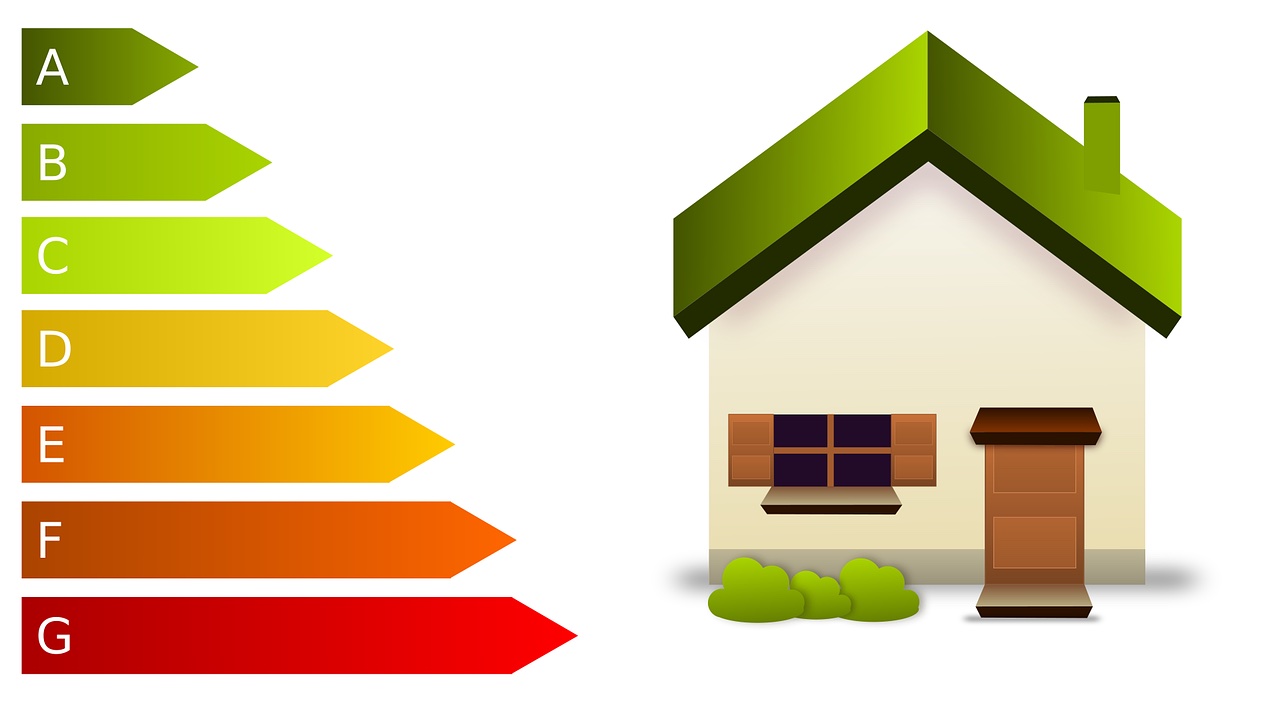
An Energy Performance Certificate (EPC) rates your property's energy efficiency from A (most efficient) to G (least efficient). It's a legal requirement in England and Wales whenever you sell, rent, or build a property.
- Legally required: You must have a valid EPC before marketing a property for sale or rent. Failure to provide one can result in a fine of up to £5,000.
- Valid for 10 years: Once issued, your certificate lasts a decade. No need to renew unless you want an updated rating after improvements.
- Includes recommendations: Every EPC comes with practical suggestions to improve your rating, from loft insulation to upgraded boilers.
- Registered on a public database: Your certificate is lodged on the government's EPC register within 24 hours of assessment.
Rated 5.0 on Google
Read what homeowners and landlords say about working with us.
Very professional, communicated prior to visit and offered consultancy on how to improve the energy rating and provided the EPC on the same day! Highly recommend the service.
Very professional and got report done on same day.
Great service from start to finish. I booked an EPC and the whole process was smooth and professional. Everything was completed quickly and the communication was clear throughout. Very happy with the service and would definitely recommend.
Why choose Kubo?
We regularly assess properties on the Mottingham estate — the uniform 1930s construction means we know exactly what to look for.
Fully accredited
Accredited through Quidos and Elmhurst, and registered with the approved government schemes.
Next-day appointments
Short notice is fine. Next day and same day appointments are available right across our area.
Fixed pricing from £69
No hidden fees, no call-out charges. The price you see online is the price you pay.
Rated 5.0 on Google
Real reviews from homeowners and landlords across London. Professional, punctual, and helpful.


Frequently asked questions
Common questions about our services in Mottingham
Properties in Mottingham
Mottingham sits between Eltham and Chislehurst in SE9. The Mottingham Estate is one of South London's largest council housing developments from the 1930s to 1950s, now largely privately owned through Right to Buy. The area also has 1930s private semis near the station and some newer infill development near Elmstead Woods.
Common property types
- 1950s Mottingham Estate housing: The Mottingham Estate stretches across Court Farm Road, Ravensworth Road, and the surrounding streets between Mottingham Road and West Park. These properties were built by the London County Council between the late 1930s and early 1950s as part of one of South London's largest social housing programmes. Construction is typically brick cavity walls with concrete ground floors, a combination that creates specific EPC challenges. Many homes were purchased under Right to Buy from the 1980s onwards and have had varying levels of improvement since. Some owners have installed double glazing and upgraded boilers, while others retain original features including steel-framed windows and back boilers. The concrete ground floors are almost always uninsulated, which pulls ratings down by one or two bands compared to timber-suspended alternatives. Short terraced rows of four to six houses are the most common layout, with some semi-detached pairs on corner plots. Rear gardens are generous by London standards, and many properties have had single-storey kitchen extensions added over the decades.
- 1930s semis near the station: The streets closest to Mottingham station, including Grove Park Road, Mottingham Lane, and parts of Castlecombe Road, feature privately built 1930s semi-detached houses that are distinct from the estate housing. These were developed for sale to owner-occupiers during the interwar suburban expansion of South London. They typically feature bay windows to the front, cavity brick walls, hipped roofs with clay tiles, and front gardens with original low brick boundary walls. Internal layouts follow the standard 1930s pattern of two reception rooms downstairs with a rear kitchen extension, and three bedrooms upstairs with a separate bathroom. Many have been extended to the rear or into the loft over the years. The cavity walls are often unfilled, which is the single biggest factor in lower EPC ratings for this type. Hipped roofs reduce the available loft area for insulation compared to gable-ended designs, but there is usually still enough accessible space to make loft insulation worthwhile. Properties near the station command higher prices and are popular with commuters.
- Purpose-built flats on West Park: Along West Park and the roads leading off it towards Eltham, there are several blocks of 1960s purpose-built low-rise flats, typically three or four storeys high. These were built as council housing and many are now privately owned or managed by housing associations. Construction is generally concrete frame with brick cladding. A significant number of flats in these blocks still rely on electric storage heaters for their primary heating, which scores poorly on EPCs compared to gas central heating. Storage heaters are one of the most common reasons we see D and E ratings in Mottingham flats. The blocks have flat roofs, which can also be a weak point for thermal performance if not properly insulated from above. Individual flats are compact, usually one or two bedrooms, with relatively small floor areas. Some blocks have had communal improvements such as external wall insulation or new windows funded by the housing association, but coverage is inconsistent across the area.
- Victorian cottages near the Eltham border: A small number of Victorian cottages and terraced houses survive on the roads closest to the Eltham border, particularly along parts of Mottingham Road and the older sections near the railway line. These date from the 1880s and 1890s, predating the suburban development that followed. They are built with solid brick walls, typically 9-inch single-skin construction, which is the most thermally inefficient wall type assessed under RDSAP. Most have been modernised internally with updated kitchens and bathrooms, but the fundamental wall construction remains the biggest drag on their EPC ratings. Internal wall insulation is the main recommended improvement, though it reduces room sizes and is costly to install. Many of these cottages have had replacement double-glazed windows fitted, and some have had loft insulation added, but without addressing the walls, ratings typically sit at D or E. These properties are sought after for their character and are popular with buyers looking for something different from the estate housing that dominates the rest of Mottingham.
Typical EPC issues we find in Mottingham
- Unfilled cavity walls: The 1930s semis and 1940s-1950s estate housing both have cavity walls, but many remain unfilled. Cavity wall insulation is one of the most cost-effective improvements available and can shift a rating by one full band.
- Storage heaters scoring badly: Electric storage heaters in the 1960s flat blocks on West Park score significantly worse than gas central heating under RDSAP. Switching to a gas combi boiler with radiators, where a gas supply is available, is one of the most impactful changes a flat owner can make.
- Concrete floors with no insulation: The ex-council properties on the Mottingham Estate almost all have solid concrete ground floors with no insulation beneath. This is difficult and expensive to retrofit, but it contributes to lower ratings across the board.
- Aging boilers in ex-council stock: Many Right to Buy properties on Court Farm Road and Ravensworth Road still have boilers installed by the council 20 or more years ago. Replacing an old G-rated boiler with a modern condensing model can improve an EPC by one or two bands on its own.
- Flat roof extensions: Rear kitchen extensions with flat felt roofs are common across the estate. These are typically uninsulated and lose heat rapidly. Insulating during a re-roof is the most practical solution.
Nearby areas we cover
As well as Mottingham, we cover the surrounding SE postcodes. Same day and next day appointments are available across all of them.
Eltham · New Eltham · Deptford · Greenwich · Charlton · Kennington · Catford · Grove Park · Lee · Camberwell
Commercial property in Mottingham? We also do commercial EPCs in Mottingham for shops, offices, restaurants and industrial units, from £149.
Book your EPC in Mottingham today
Get an instant quote, pick a time that suits you, and have your certificate lodged on the government register within 24 hours.
Get your EPC quoteWhat our customers say
Rated 5.0 out of 5 on Google.